Does your project need strategy or just production?
An honest guide to deciding before you hire an agency or a production house.
Not every audiovisual project needs a full strategic process. Some mostly need a well-executed production. Confusing these two scenarios is the most common way to overpay — or underpay and end up disappointed.
But the line between the two is almost never as clear as it looks from inside the company.
When you need strategy first
- The organization is changing its narrative: a crisis, a merger, a leadership change, a new operation in a community.
- There's more than one audience, with different interests, and the same message doesn't work for all of them.
- No one in the room agrees on what's most important to say.
When you mostly need production
- The message is already clear, decided and approved internally.
- There's a format that has already worked before.
- The goal is to document something that's happening anyway, like an event or a graduation.
"Ready to shoot" doesn't always mean ready
This is where our work shows the most. Many organizations come to us convinced they only need production: the message is approved, the script is written, the shoot date is set. And often, in the first conversation, the project changes.
Not because the idea was wrong, but because it was thought through from the inside. A message approved internally usually describes what the organization wants to say about itself, not what its audience needs to hear. Other times the plan is right but falls short: covering an event can stay a record of the day, or be planned to also yield material for social media, recruiting or the annual report. Shooting costs nearly the same either way; what changes is how much it returns.
Having worked with energy companies, foundations, universities and exporters lets us spot this quickly. Sometimes what we adjust is the message. Sometimes it's the problem the video is trying to solve. And sometimes it's just how to get more out of what was already planned.
A renewable energy company came to us to present its sustainability report. The idea was clear and approved: a presentation of the report, with photographs and text, to show what they had achieved in a visual way. But a presentation like that was going to describe those achievements, not show them. Numbers explain what was done; they don't make it visible.
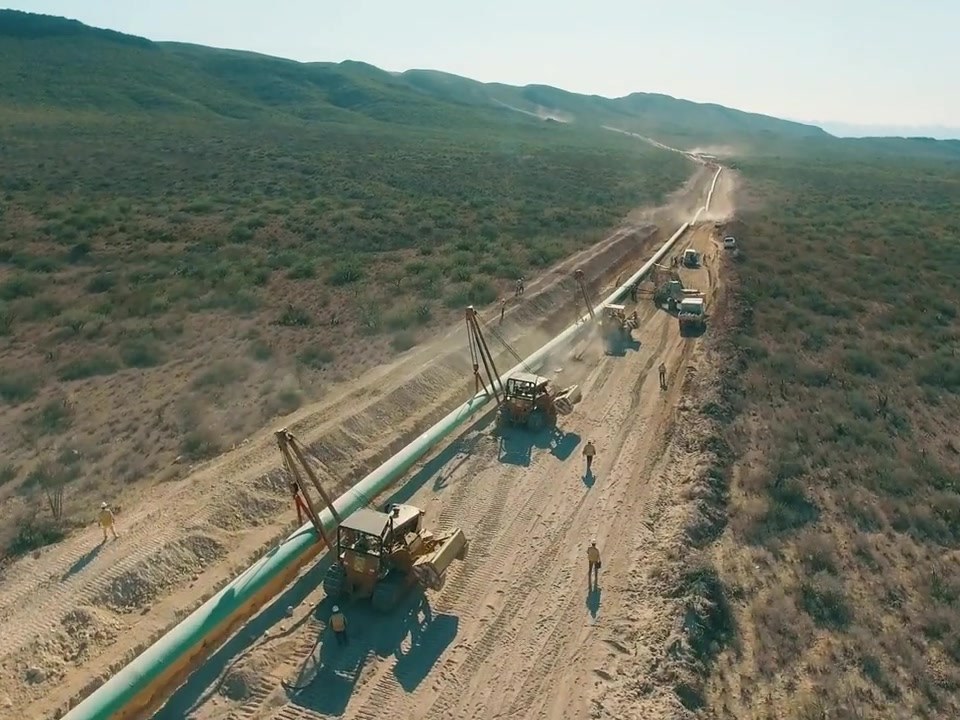
We proposed going out to document it: filming and photographing the projects on site, and the people behind the numbers. That single shoot produced five pieces: two video versions of the report, an internal communication piece to motivate their team, a video for social media and another to support their website. One shoot, five audiences served.
That's why, even when a project mostly needs production, it helps if whoever is producing it knows how to ask questions before turning on the camera.
The simplest test
Try writing, in a single sentence, what your audience should understand after watching the video.
If the sentence comes easily, is about the audience and not the company, and everyone who approves the project agrees with it, the strategic work is already done and what's left is to produce it well.
If it's hard to write, or each department writes it differently, that's the real problem. And anyone who starts shooting without solving it is tackling the wrong problem, no matter how well the camera rolls.
And if you're not sure which side your project is on, that conversation is exactly where we start.

Every project starts with a conversation.
Tell us about your organization and what you need to communicate. We reply with an initial proposal within 48 business hours.